
Managing Conformational Challenges in the Sport Horse: A Practitioner’s Guide to “Over at the Knee”

In practice, you will inevitably encounter horses who don’t fit the “ideal” conformational model—yet they are athletic, willing, and actively working. One common presentation is the horse that is over at the knee (buck-kneed).
The key question is not:
“How do we fix this?”
But rather:
“How do we support this horse so they can stay comfortable, functional, and successful long-term?”
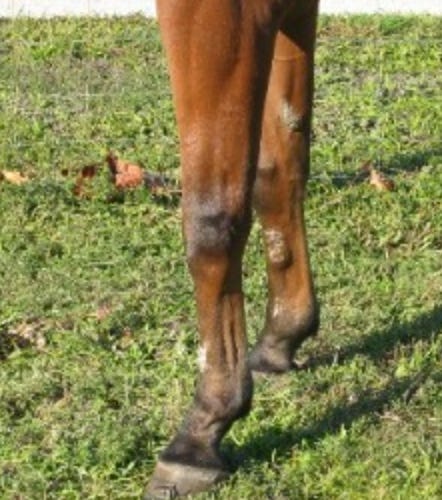
Understanding the Bigger Picture
Conformation is not a flaw—it’s a starting point.
A horse that is over at the knee:
Places more load through the flexor tendons and anterior structures
May experience increased strain during collection, transitions, and repetitive work
Often compensates subtly through the shoulder, thoracic sling, and opposite limb
However, many of these horses remain completely sound—especially when managed correctly.
The Goal: Manage Load, Not Force Correction
As practitioners, our role is not to change structure—it is to:
✔ Support efficient movement patterns
✔ Reduce compensatory strain
✔ Maintain symmetry and adaptability
Trying to “correct” the knee directly can often create more tension and dysfunction elsewhere.
Where Practitioners Should Focus
